
What comes to mind when we talk about inclusion? For most people, it’s ramps and sign language interpreters. Inclusion, however, is not just about infrastructure, it is also about safety, dignity, and giving every child a chance to get an education with dignity. In Kenya’s special needs schools, the dream of dignified learning is held together by the assiduous efforts of under-resourced educators and the silent determination of children facing unthinkable challenges.
Brain is 9 years old, deaf, and born to a single mother who earns her living as a casual laborer in Kakamega County. School levies are simply a luxury she cannot afford. Brian is, however, determined to get an education. At the beginning of every term, his mother drops him at the gate and hurriedly leaves. She does not get into the school for fear of being mandated to pay the school levies that have accumulated over the years.
Brian’s future rests in the compassionate resolve of Madam Jane, the headteacher of St. Emilian Eregi Special School, a mixed public primary school for the deaf. She openly welcomes Brian without hesitancy despite his mother’s inability to contribute to school levies for food, bedding, uniforms, and basic supplies.
Every term, this unsung hero fights the same battle, to keep children like Brian in school. Although government support is available, it is sub-optimal, and parental contributions are undependable. However, the needs- food, bedding, drugs, and uniforms are constant.
Then there is Hellen 13years, also deaf. Her bright and bubbly personality will charm even the coldest of hearts. Each month however brings a quiet, deeply personal challenge- her menstrual period. Her highly vulnerable family cannot afford sanitary towels. For most girls, this means missing school. But not for Hellen. She does not miss school. Instead, she runs to school when her period starts- not for lessons, but for help.
At school, Madam Jane aware of the challenges facing her learners and the possible impact on their education, keeps a stash of sanitary towels. The sad but also heroic truth is; that she buys these pads from her own pocket. The government does not consistently provide sanitary pads to the school. Still, this unsung hero ensures that no girl has to miss school or sit in shame because of a natural phenomenon such as menstruation.
St. Emilian, like many special schools in Kenya, is held together by human sacrifice, by unsung heroes like Madam Jane. The headteacher is forced to wear many hats- teacher, school nurse, counselor, fundraiser, mother. Although she has a team, the needs are overwhelming.
The learners live in a world that overlooks them. They lack; proper bedding, sufficient food supplies, sanitary products, and a functional and safe kitchen (meals are cooked in a mud structure vulnerable to wind and rain). While the Kenyan legislation endeavors to have inclusive education, there still remains a huge gap. In practice, inclusion hangs by a thread, and in schools like St. Emilian, the thread is an educator’s personal sacrifice.
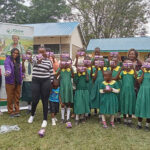
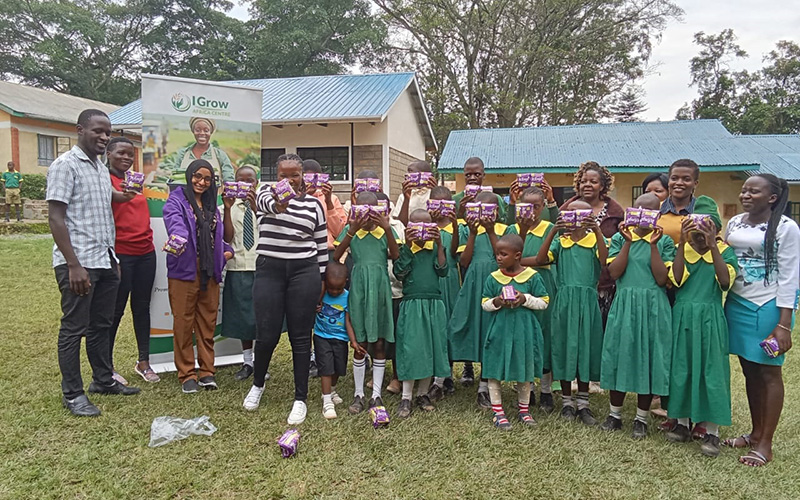
Through I Grow Africa Centre (IGAC), we recently delivered sanitary towels to ease the burden for girls like Hellen. We however left with a heavy heart. We saw a school doing its best with too little and we knew we needed to do more.
Join us to uplift children living with disabilities, not just by saying that we believe in inclusion but through action.
Let’s Rewrite the story.
- Hellen doesn’t have to run to school when her period starts
- Brian doesn’t have to depend on mercy to get an education
- Madam Jane doesn’t have to carry this burden alone.
Inclusion should not hang by a thread. It should be woven into the fabric of our educational system and our society — firm, strong, and fair.
Here’s how you can help:
- Contribute to a monthly menstrual hygiene package (pads, undergarments, soap, oil
- Donate or supply bedding — mattresses, blankets, and sheets for boarding learners
- Support food rations to ensure every child eats daily
- Help construct a proper kitchen — safe, sustainable, and dignified
- Essential medication, especially for learners with epilepsy
DM me or reach out via https://igac.co.ke/services/; programs@igac.co.ke to partner, donate, or support.
Budget Summary Per Child (Kenya Shillings – Ksh)
|
Item |
Unit Cost |
Term 1 (4 months) |
Term 2 (3 months) |
Term 3 (2.5 months) |
Annual Total |
|
Food (Ksh 100/day) |
100/day × ~30 days/month |
12,000 |
9,000 |
7,500 |
28,500 |
|
Menstrual Hygiene Pack (Girls) |
Pads (540) + Soap (300) + Oil (200) = 1,040 |
1,040 |
1,040 |
1,040 |
3,120 |
|
Dignity Pack (Boys) |
Soap (300) + Oil (200) = 500 |
500 |
500 |
500 |
1,500 |
|
Bedding (blanket + sheets) |
Blanket (800) + Sheets (700) = 1,500 |
1,500 |
– |
– |
1,500 |
|
TOTAL per child (Girls) |
8,540 |
5,540 |
4,790 |
18,870 |
|
|
TOTAL per child (Boys) |
8,000 |
5,000 |
4,250 |
17,250 |
Budget Summary – School Totals by Item (Kenya Shillings – Ksh)
|
Item |
Unit Cost |
Quantity |
Total Cost (Ksh) |
|
Food (Girls) |
14,250 |
50 girls |
712,500 |
|
Food (Boys) |
14,250 |
45 boys |
641,250 |
|
Menstrual Hygiene Packs (Girls) |
3,120 |
50 girls |
156,000 |
|
Dignity Packs (Boys) |
1,500 |
45 boys |
67,500 |
|
Bedding (Blanket + Sheets) |
1,500 |
95 learners |
142,500 |
|
🟩 Grand Total |
1,719,750 |
||
|
🛏️ Optional: Mattresses |
2,500 |
50 learners |
125,000 |